.png)


Let’s be honest, everyone in IMC and AIMC knows what Kanban and SCRUM are. We’ve all been through the slides, the classes, and built a few post-it armies on whiteboards or digital tools ourselves. But using them well, and beyond just checking a box for class? That’s a whole different thing.
This quarter, I’ve been a product manager for this class, and I’ve actually started using Kanban and SCRUM frameworks not just for our sprints, but for my other classes, personal projects, and even work, and it’s been kind of a game changer.
We’ve all heard the textbook definitions in class: SCRUM is an Agile framework for team collaboration, and Kanban is a visual system for managing tasks. But for students, it’s less about the textbook and more about turning stress into structure.
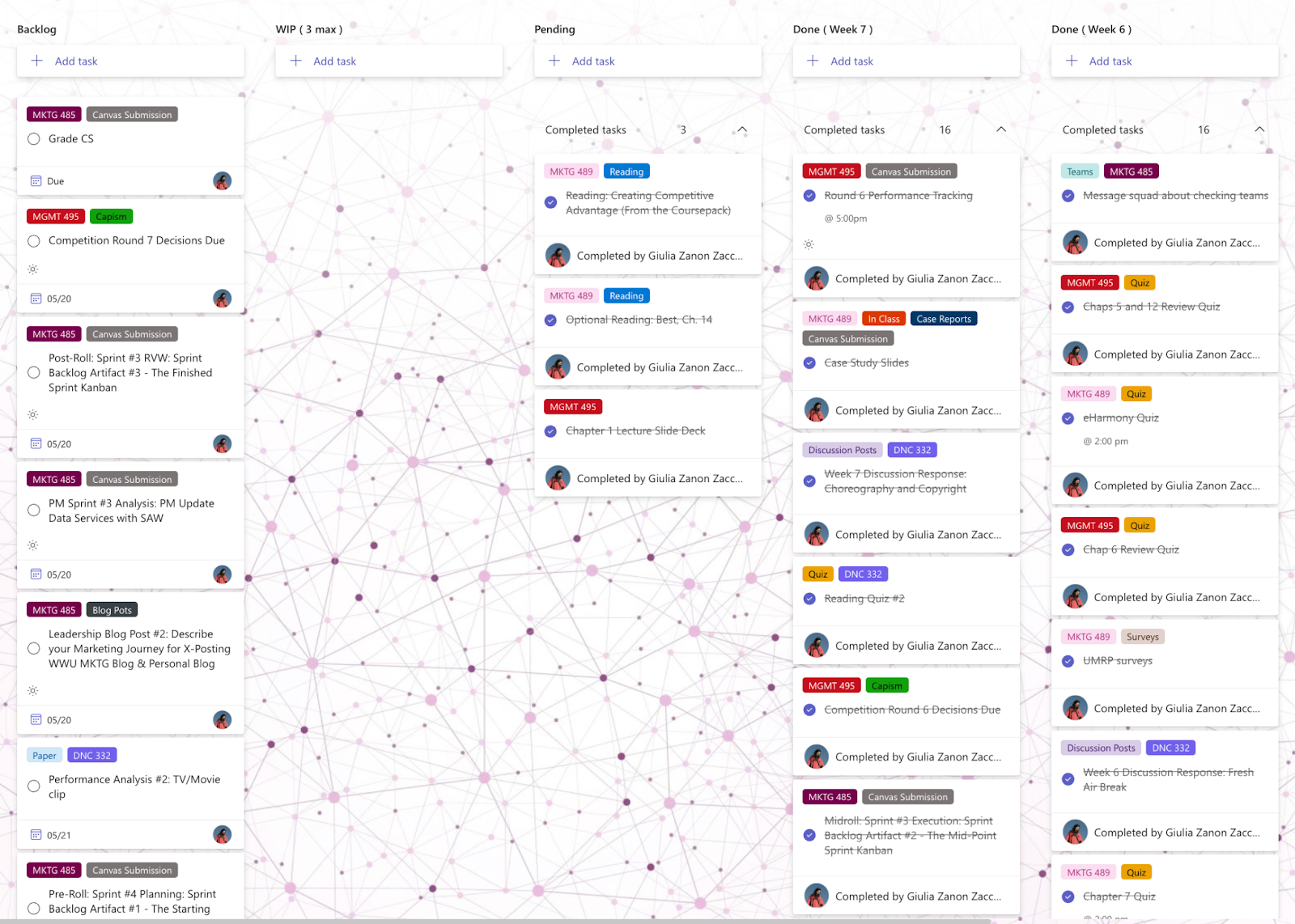
Tools like Trello, Teams, or even physical whiteboards are great for visual learners. I personally use Teams for everything, from class projects and homework to planning around my dance practices and work to-dos.
Using SCRUM to break things into sprints and Kanban boards to visually track progress helps my brain stay calm. When everything’s laid out, from class work to random to-dos from my daily life, I can actually see where I’m at and what’s next. It turns the chaotic mess of deadlines into something that feels manageable.
Using Kanban and SCRUM across everything has helped me:
I’m not just a student, I’m in clubs, I work, and I’m managing a team in this class. Having one central place to track it all helps reduce decision fatigue.
SCRUM encourages setting sprint goals, which makes big projects feel manageable. Sprints are designed to help teams move in quick, clear cycles, and that applies to school just as well as your personal life.
There’s power in moving a task to “Done.” It makes progress feel real and keeps motivation up, even when midterms hit.
But let’s be honest...
No matter how color-coded your board is, burnout is still real. Some weeks, my “To Do” column looks more like a cry for help. That’s okay. Even Harvard Business Review acknowledges that high-performing people need space to pause and reset, and using Kanban can actually help you recover from burnout by giving structure to your recovery process.
The whole point of these tools, I think, is not perfection, it’s awareness. SCRUM and Kanban help you see your workload and plan better, but they can’t stop real life from getting chaotic.
You can have the best system in the world, but if your team isn’t communicating, it won’t save your sprint. I’ve learned that check-ins and retros are just as important as task tracking.
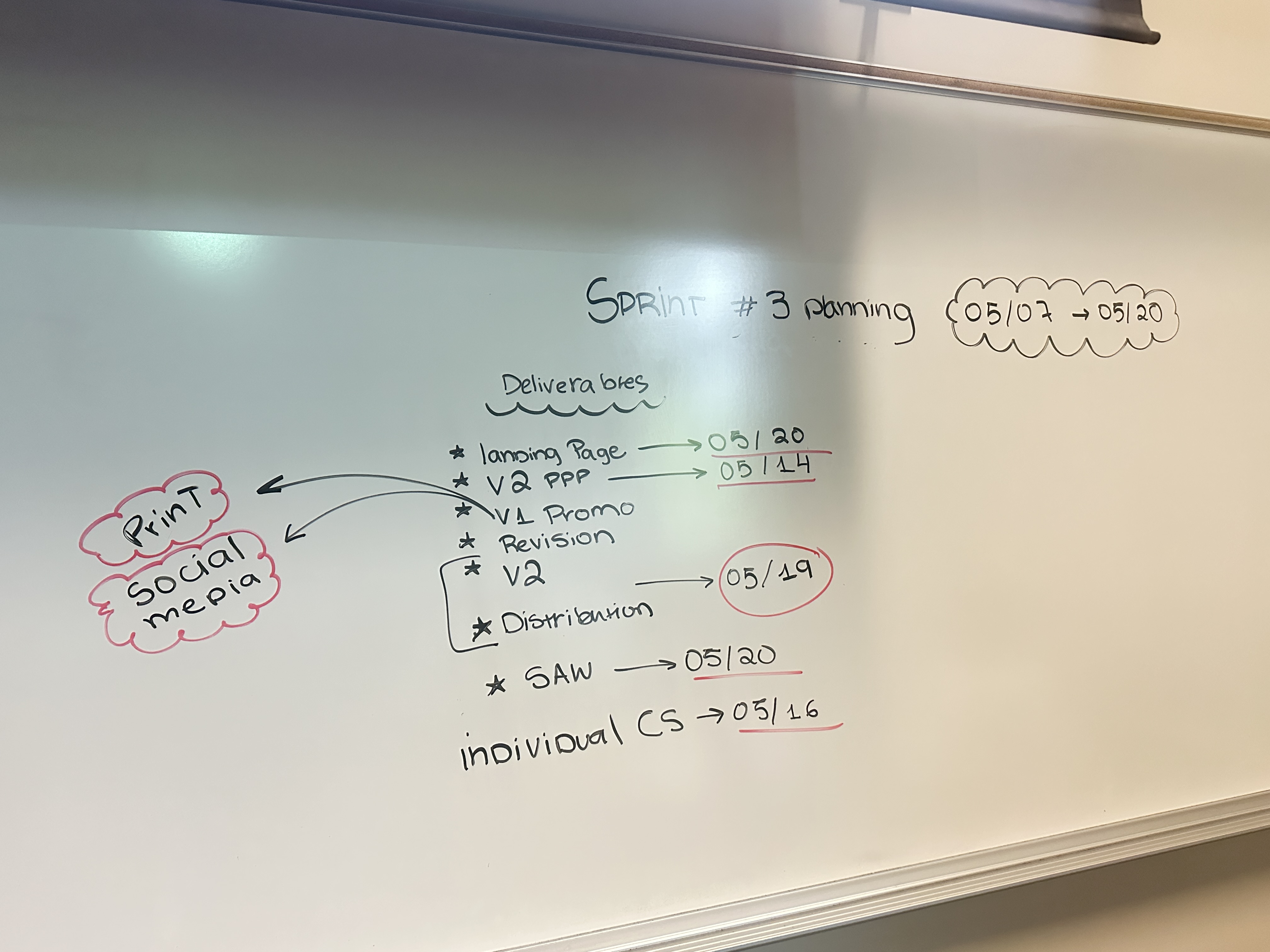
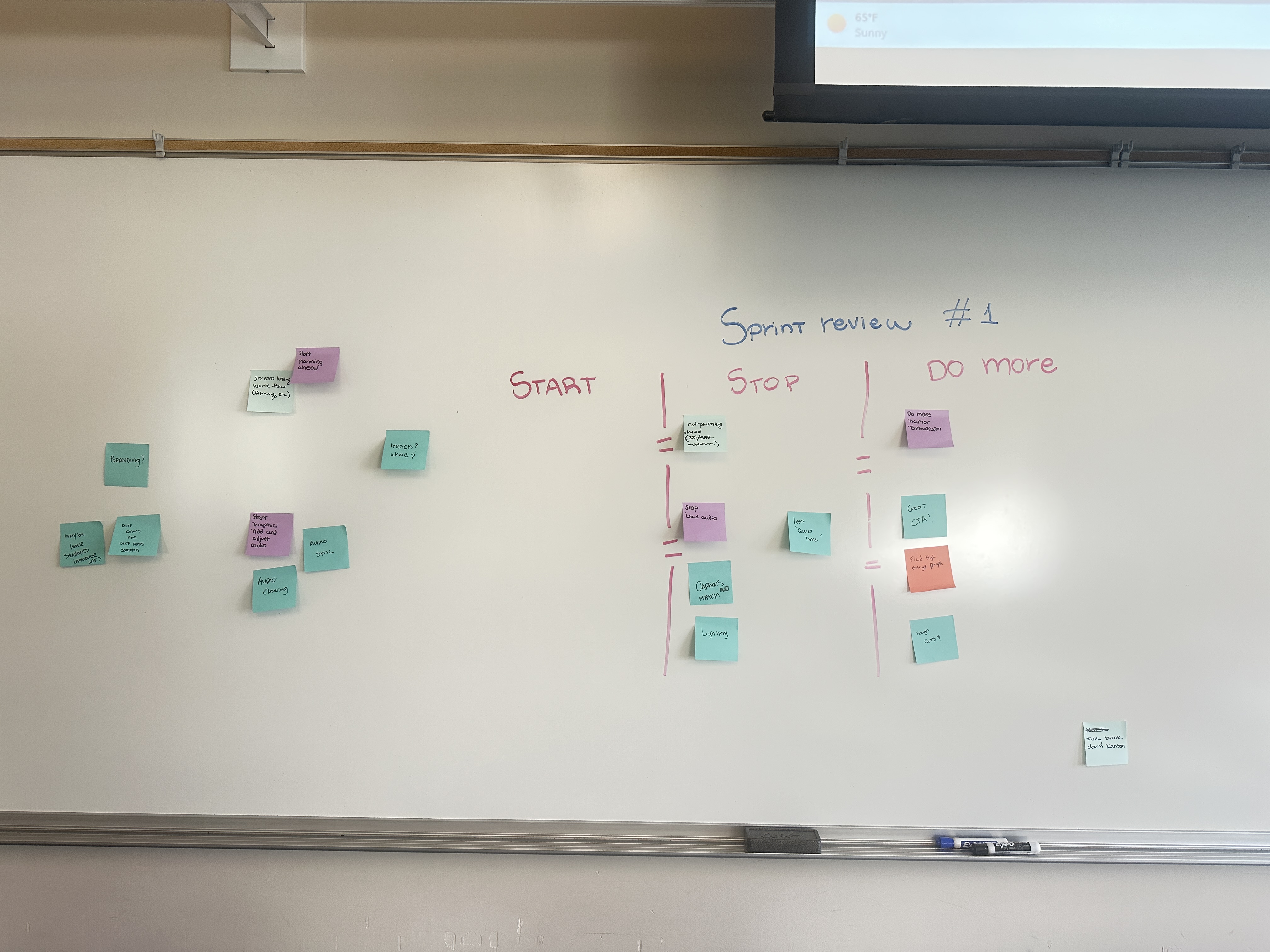
If you’re juggling a lot this quarter (who isn’t?), here are a few things that have worked for me:
Being a student is messy. But Kanban and SCRUM give that mess a container—and that’s often enough. Whether you’re leading a team or just trying to survive midterms and finals, these tools can make the chaos feel a little more under control.
If you’re feeling overwhelmed, start by moving just one sticky note. One small task. One win at a time.
If you’re already familiar with these tools, I’d challenge you to really lean into them. Not just to turn in an assignment or check off a sprint, actually use them to manage your day-to-day. Build a system that works for you. Use a whiteboard, use Trello, use Teams, whatever clicks with your brain.
And most importantly: don’t let the tools run you. Burnout is real, and no amount of sprint planning can fully prevent it. But when it’s working? It makes juggling school, work, and life a little more possible.
And remember: done is better than perfect. 🧠✨
.png)

