This past spring, I was the Product Manager for a team of three content creators working on a marketing campaign for the WWU Marketing Department. I had been a content creator before, so I figured stepping into a leadership role wouldn’t be too different, but I was definitely wrong. Being a PM is a very different experience. You’re no longer just doing the work; you’re leading people, organizing timelines, answering questions, and making sure everything actually gets done.
This blog is a breakdown of what I learned from the experience about leading people, managing projects, and working with the Agile process. If you’re thinking about being a PM for AIMC, or just want to know what it’s really like, read on.
⏳ Lesson 1: Time Management Is Not Optional
Honestly, this one hit hard. Between two capstone classes, another course, two jobs, dance, an internship, and trying to maintain some kind of social life, I was maxed out. As a PM, I wasn’t just managing my own schedule, I had to be aware of four other people’s timelines, weekly deadlines, and the overall campaign strategy.
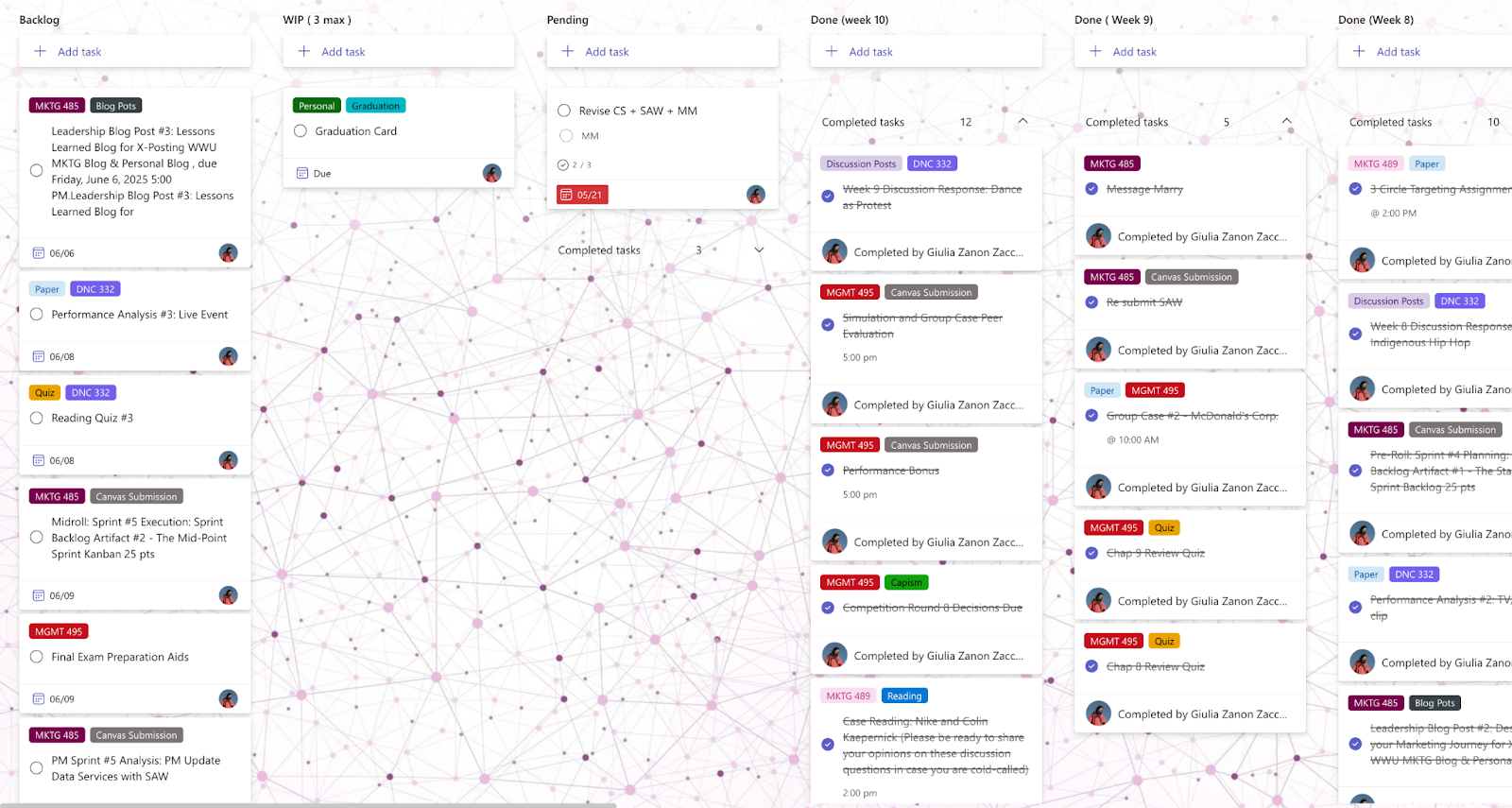
To stay afloat, I built my own personal Kan ban board to track everything I was juggling: school, work, dance, internship, and squad-related tasks. Seeing everything visually laid out helped me prioritize what actually needed to happen each day and kept me from forgetting the small stuff (which adds up fast). I also used it to prep for squad meetings so I could stay one step ahead of what we needed to cover.
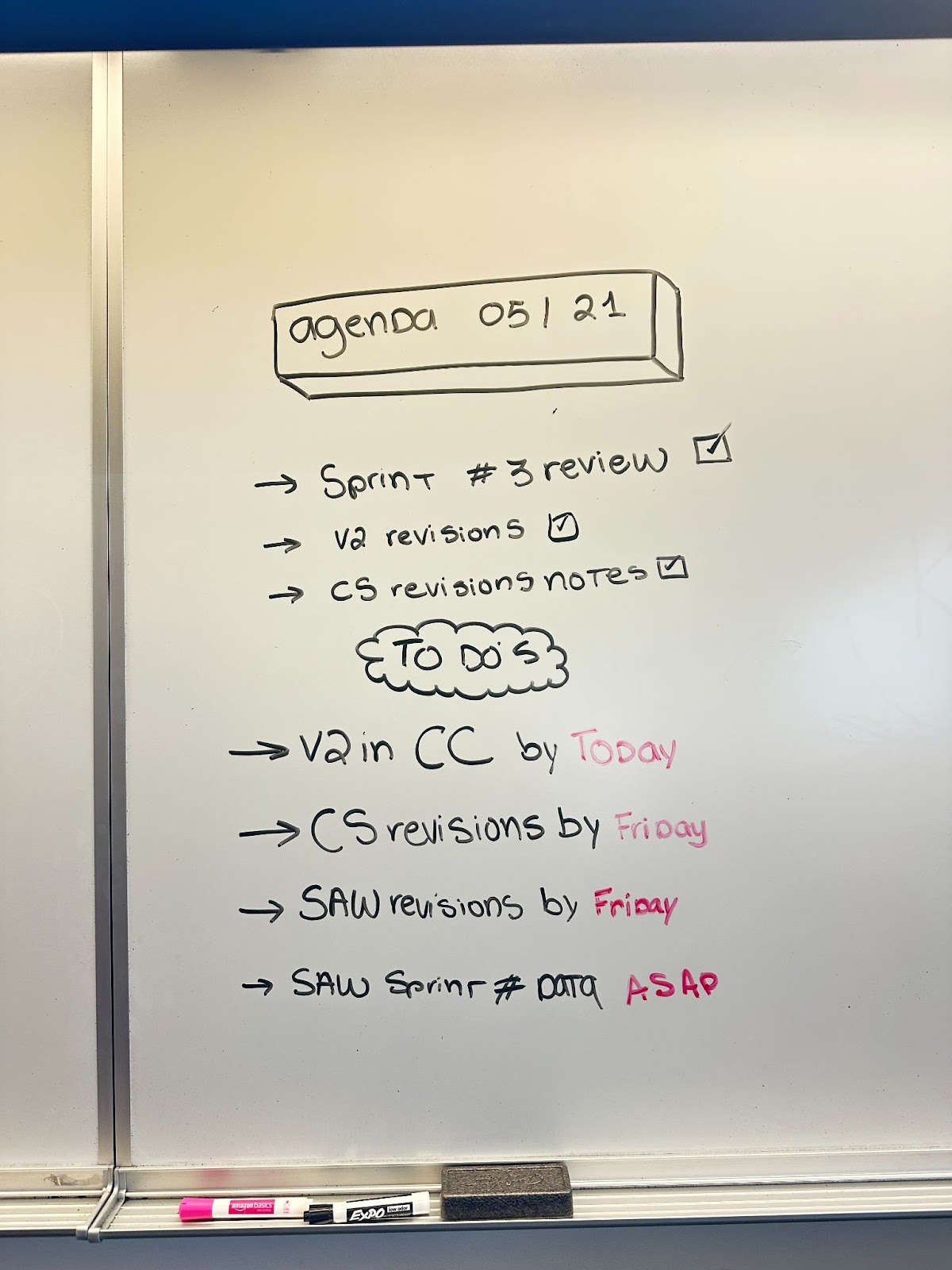
The biggest takeaway? Planning isn’t just helpful, it’s survival. You can’t just wing it when you're balancing this much. Systems like Kanban or simply just making a meeting agenda, made it possible for me to stay accountable without losing my mind.
My Personal Kan Ban
🌀 Lesson 2: Flexibility Is Key
If there’s one thing this quarter taught me, it’s that things rarely go exactly as planned, and that’s okay. Between squad members' shifting schedules, last-minute content changes, and everything I was juggling personally, I had to learn how to adapt on the fly.
There were definitely weeks where our meetings got pushed, or when we had to regroup mid-sprint to adjust roles or expectations. At first, that felt like failure, but I realized pretty quickly that flexibility is actually one of the most important skills a PM can have. It wasn’t about having everything perfect, it was about keeping things moving, even if we had to pivot.
I had to be okay with a little chaos and lean into creative problem-solving, especially when my original plans didn’t work out. Sometimes that meant last-minute rescheduling, stepping in to help where needed, or adjusting timelines to make sure we stayed realistic.
👩🏫 Lesson 3: Teaching Without Jargon
Since I’d already taken AIMC before, I came in knowing more about the media production process and Agile system. But my squad hadn’t, and I had to remind myself of that constantly. I couldn’t just throw out terms or expect people to instantly understand things the way I did.
So I slowed down. I broke things down in simple steps, showed examples from past work, and walked people through processes. Sometimes I’d even ask squad members to explain something back to me just to make sure it clicked. That little bit of teaching effort made a huge difference in how confident the team felt.
🙋♀️ Lesson 4: Ask Before You Assume
There were definitely moments where tasks didn’t get done, or someone wasn’t following through. And I’ll be honest—my first reaction used to be frustration. But I realized pretty quickly that jumping to conclusions only made things worse.
Instead, I started asking: “Hey, is there anything I can do to help?” or “Hey, guys! Is there a reason why this hasn’t been done yet?”
Nine times out of ten, it opened the door to a real conversation about stress, outside commitments, confusion, whatever. From there, we could actually problem-solve together.
🔁 What Agile Taught Me
Agile was a helpful structure for our project, but it also taught me a lot about mindset. You don’t have to have everything figured out on Day 1. Agile lets you break things into smaller pieces, test ideas, and then improve based on feedback, and honestly, that was a relief.
I also realized that repeating processes was super important. Telling someone how to do something once didn’t usually work. I had to repeat it ( multiple times ), check for understanding, and often do it with them or at least be there in case they had more questions. That extra layer of engagement helped everyone feel more involved (and helped me realize who needed more support).
🎓 Final Thoughts
If you’re thinking about being a PM in AIMC, just know it’s not a light lift, but it’s a valuable one. You’ll grow in ways you didn’t expect. You’ll get better at leading people, staying organized under pressure, and making decisions even when you’re exhausted.
Leadership isn’t about being in charge; it’s about setting a tone, building trust, and helping your team succeed. I’m really proud of what we accomplished, and I’m even more proud of how much I grew in the process.
Shout-out to my squad for sticking with me through a lot of changes and new processes!
.png)


.jpeg)


.jpeg)
.png)

